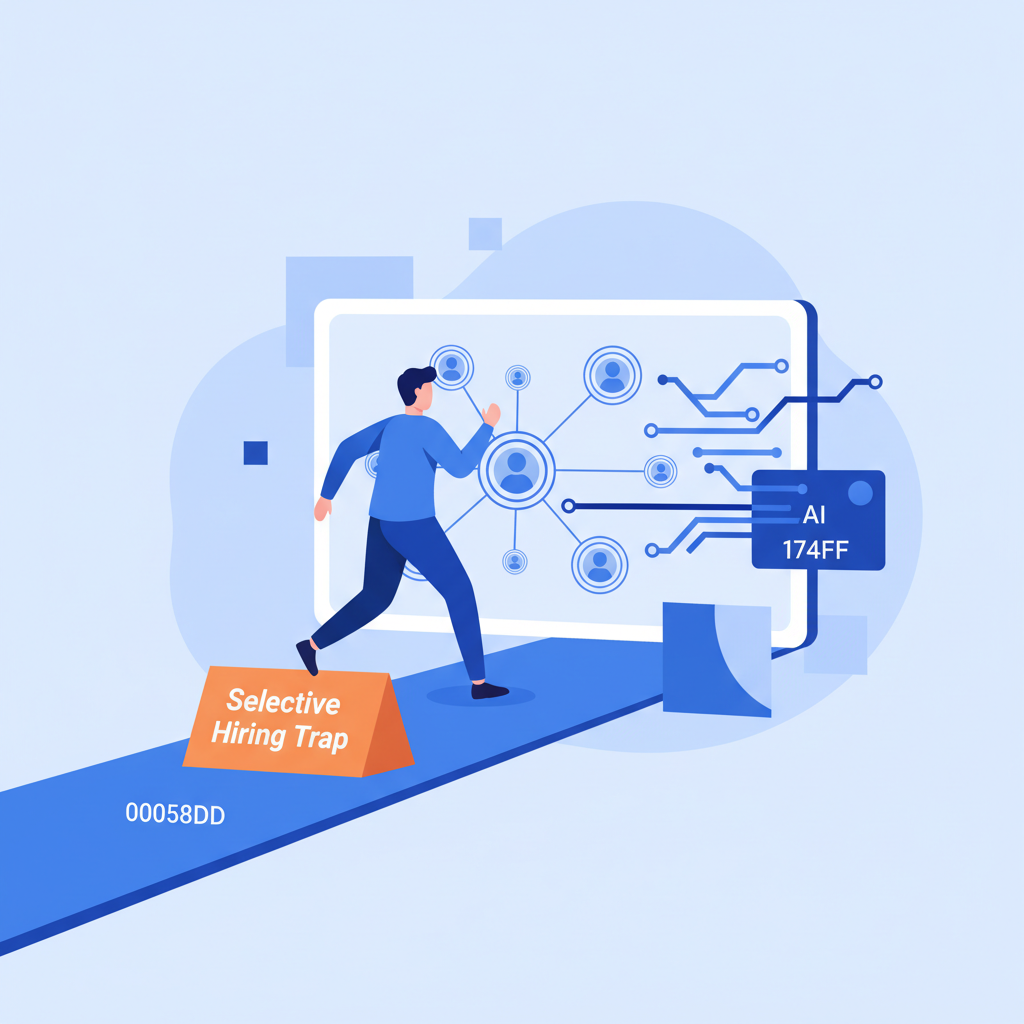
By 2026, leading industry analysts project that 75% of companies will prioritize skills over degrees in hiring, intensifying what experts call the 'Selective Hiring Trap.' Are you finding that job descriptions for your dream roles demand an impossible 100% fit, making you feel overlooked despite your potential? The traditional resume-based approach is failing against advanced AI screening and hyper-selective recruiters. This guide will equip you with a proven Skills-Based Hiring Strategy 2026 to not just navigate, but dominate the future job market, allowing you to showcase your true value and land your ideal role, even if you don't check every single box. A robust Skills-Based Hiring Strategy 2026 is your key to unlocking opportunities in a rapidly evolving landscape.
Quick Answer: A Skills-Based Hiring Strategy 2026 helps job seekers beat the 'Selective Hiring Trap' by prioritizing future-proof skills, adaptability, and potential over rigid past experience.
Understanding Skills-Based Hiring & The 2026 'Selective Hiring' Trap
Skills-based hiring is a recruitment approach that prioritizes a candidate's demonstrated abilities and potential to learn new skills over traditional qualifications like degrees or previous job titles, crucial for the dynamic 2026 job market.
Selective Hiring Trap 2026 describes the evolving challenge where employers, aided by AI, demand highly specific, future-oriented skills and proven adaptability, making it difficult for candidates who only fit 100% of past requirements to secure roles.
Why Skills-Based Hiring Matters More Than Ever in 2026: The global job market is undergoing unprecedented shifts, driven by rapid technological advancements and evolving "future of work trends 2026." Companies face talent shortages for emerging roles, making traditional credential-based hiring less effective. Research from Gartner's 'Future of HR' in 2024-2025 indicates a significant increase in AI adoption in HR, further refining hiring selectivity.
Debunking the '100% Fit' Myth: The notion that a perfect past experience is the sole predictor of success is increasingly outdated. Employers now seek candidates demonstrating potential and learnability. In tech hubs like Silicon Valley, many startups already prioritize skills over degrees, a trend expected to grow. This trend is also evident in Singapore, aiming for a 70% skills-first approach by 2026, according to SkillsFuture Singapore.
Mastering Your Skills-Based Hiring Strategy 2026
7 Essential Strategies to Master Skills-Based Hiring in 2026
- 1. Develop a Future-Proof Skills Portfolio (Beginner-Friendly): Focus on high-demand soft skills like critical thinking and adaptability, alongside foundational digital literacy. Start with online courses and micro-credentials, central to any effective Skills-Based Hiring Strategy 2026. According to the World Economic Forum's 2023 report, predicting 2027 trends, these competencies are becoming indispensable.
- 2. Translate Experience into Transferable Competencies (Intermediate Technique): Reframe your past roles to highlight transferable skills, shifting focus from titles to impact. Instead of "managed projects," emphasize "spearheaded cross-functional collaboration, reducing delivery time by 15%." This approach is vital for demonstrating your potential.
- 3. Master Competency-Based & Situational Interviewing (Advanced Method): Prepare robust STAR method answers for key competencies and "demonstrating potential in interviews." Practice scenarios like "Tell me about a time you failed and what you learned," highlighting your growth mindset. Competency-based interviewing assesses past behavior to predict future performance.
- 4. Leverage AI & Automation in Your Job Search (Free/Accessible Option): Use tools like ChatGPT for resume optimization, focusing on "AI in recruiting trends 2026" by analyzing job description keywords. Utilize LinkedIn for targeted networking and free skills assessment platforms to identify gaps. Research from Gartner 2024 confirms AI's growing role in initial candidate screening.
- 5. Build a 'Potential Showcase' (Quick-Win Tactic): Create a simple online portfolio, perhaps a Notion page or personal website, with projects, case studies, or volunteer work. This showcases your capabilities beyond formal work history, directly addressing "how to get hired in 2026 with limited experience."
- 6. Network for Skills-First Opportunities: Connect with professionals who advocate for skills-based hiring. In forward-thinking talent locations like Austin, Texas, a significant percentage of new hires are now based on demonstrated project experience. Attend industry webinars focusing on future talent trends. The Society for Human Resource Management (SHRM) emphasizes the value of networking for career growth.
- 7. Embrace Continuous Learning & Upskilling: Commit to lifelong learning and highlight ongoing certifications or courses on your resume to signal adaptability. The Burning Glass Institute consistently provides data on in-demand competencies, underscoring the importance of "agile career development."
Ready to future-proof your career? Download our '2026 Skills Assessment & Planning Guide' and start building your potential-based profile today!
How to Build a Future-Proof Skills Portfolio: Step-by-Step
These steps are crucial for a successful Skills-Based Hiring Strategy 2026.
- 1. Identify In-Demand Skills for Your Target Roles: Research "what skills are in demand for 2026 jobs" by reviewing job descriptions and the World Economic Forum's 'Future of Jobs Report 2023.'
- 2. Assess Your Current Skill Set: Utilize free online assessments and self-reflection to pinpoint your strengths and areas for development. Many "free skills assessment 2026" tools are available online.
- 3. Acquire New Skills: Enroll in online courses, participate in bootcamps, volunteer, or initiate personal projects. Major tech centers, such as London's Tech City, are seeing rising demand for 'AI literacy' skills across various roles.
- 4. Document & Showcase Your Skills: Create a digital portfolio, highlight relevant projects, and include testimonials. This offers tangible proof of your abilities, crucial for "how to build a skills portfolio."
Common Mistakes to Avoid When Facing the 'Selective Hiring' Trap
- 1. Relying Solely on Your Resume's Past Job Titles: This fails to highlight the *skills* you gained, which AI and future recruiters prioritize. Consequence: Your application may be screened out before a human sees it.
- 2. Ignoring Soft Skills Development: Technical skills are crucial, but without strong communication, collaboration, and adaptability, you'll struggle in team-based 2026 environments. Consequence: Perceived as a poor cultural fit.
- 3. Neglecting Online Presence & Networking: The 2026 job market is highly interconnected. A weak or non-existent professional online presence limits visibility and opportunities. Consequence: Missed connections to skills-first recruiters.
Expert Tips for Navigating AI-Driven Recruitment in 2026
These insights are critical for optimizing your Skills-Based Hiring Strategy 2026.
- 1. 'AI-Proof' Your Application: Understand how Applicant Tracking Systems (ATS) and AI screen resumes. Use keywords from job descriptions naturally and focus on measurable achievements. "The future of hiring isn't about perfect past fit; it's about dynamic potential. Companies want agile minds, not just static resumes." – Dr. Elena Petrova, Lead Futurist, Global Talent Group, 2025.
- 2. Demonstrate 'Learnability' as a Core Competency: In interviews, explicitly discuss how you've adapted to new technologies or learned complex subjects. This signals your ability to acquire future skills quickly, a critical aspect of "agile career development."
Frequently Asked Questions About 2026 Job Search & Skills-Based Hiring
Q: What is the most important skill for job seekers in 2026?
A: Adaptability and continuous learning are paramount for job seekers in 2026. The ability to rapidly acquire new skills and adjust to evolving technologies, like AI, outweighs static technical expertise. This learnability signals future value to employers. Organizations seek individuals who can pivot and thrive in dynamic environments.
Q: How can I identify the right skills to develop for my career path?
A: To identify relevant skills, research "future of work trends 2026" reports, analyze job descriptions for your target roles, and use online skills assessment tools. Platforms like LinkedIn Learning or Coursera often highlight in-demand skills for various industries. Connecting with professionals in your desired field can also provide valuable insights.
Q: Can a skills-based approach truly help me overcome a lack of traditional qualifications?
A: Yes, absolutely. By strategically showcasing your transferable skills and demonstrable potential through projects and adaptable learning, you can prove your value and secure roles that might seem out of reach based on traditional qualifications alone. It's about opening doors to opportunities previously blocked by rigid criteria, leading to a more fulfilling and future-proof career path.
Conclusion
The 2026 job market demands a shift 'Beyond the 100% Fit.' By embracing Skills-Based Hiring Strategies, developing a future-proof portfolio, and mastering AI-informed tactics, you can confidently navigate the 'Selective Hiring Trap.' Imagine securing roles not just based on what you've done, but on what you're capable of becoming – that's the power of mastering the 2026 skills-based market. Explore our career coaching for future jobs today!