How Recruiters Use LinkedIn (And How to Be Found)
Unlock recruiter secrets! See how recruiters use LinkedIn to find talent in 2026. Optimize your profile now.
Unlock recruiter secrets! See how recruiters use LinkedIn to find talent in 2026. Optimize your profile now.
Quick Answer: Recruiters use LinkedIn as their primary sourcing platform, using LinkedIn Recruiter and advanced search to find candidates. They filter profiles by keywords, skills, experience, and activity, prioritizing optimized profiles and leveraging AI for efficient matches.
LinkedIn Recruiter: LinkedIn Recruiter is a premium platform for talent acquisition professionals, offering advanced search filters, candidate management features (e.g., projects, pipelines), and direct messaging capabilities to efficiently source and engage with potential hires across LinkedIn's vast network.
The evolution of LinkedIn's AI-driven search algorithms and specialized recruiter tools in 2026 means generic profiles are easily overlooked. Understanding these mechanics is crucial for discoverability, especially when considering how recruiters use LinkedIn for initial screenings. According to a 2025 LinkedIn Global Talent Trends Report, AI is now influencing over 60% of initial candidate screenings.
Many believe simply having a LinkedIn profile is enough. Myth debunked: An unoptimized profile is akin to an unlisted phone number – recruiters can't find you, even if they're looking. This gap in understanding is why many skilled professionals remain hidden from ideal opportunities.
Keyword Optimization: Ensuring your LinkedIn profile content, including headline, summary, and experience, is rich with industry-specific terms that recruiters frequently search for to find relevant candidates.
Keywords are the bedrock of visibility on LinkedIn. Recruiters search for specific terms related to job titles, skills, and industries. Ensure your profile is rich with relevant keywords found in target job descriptions. Knowing how recruiters use LinkedIn's search functions means aligning your profile with their target terms.
Your skills section and endorsements act as powerful validation. Focus on acquiring endorsements for your most critical skills from reputable connections. For example, a Data Scientist might focus on Python, Machine Learning, and SQL, verified by LinkedIn Skills Assessments. LinkedIn Skills Assessments further verify your expertise, significantly boosting your profile in recruiter searches. According to LinkedIn Talent Solutions 2024 data, 45% of tech hires in Silicon Valley were sourced via LinkedIn.
Actively engage with posts, share insights, and publish your own articles. This positions you as an industry expert, catching the eye of recruiters looking for proactive, knowledgeable candidates. Regular engagement helps improve your LinkedIn profile optimization, making it clear how recruiters use LinkedIn to spot active industry professionals.
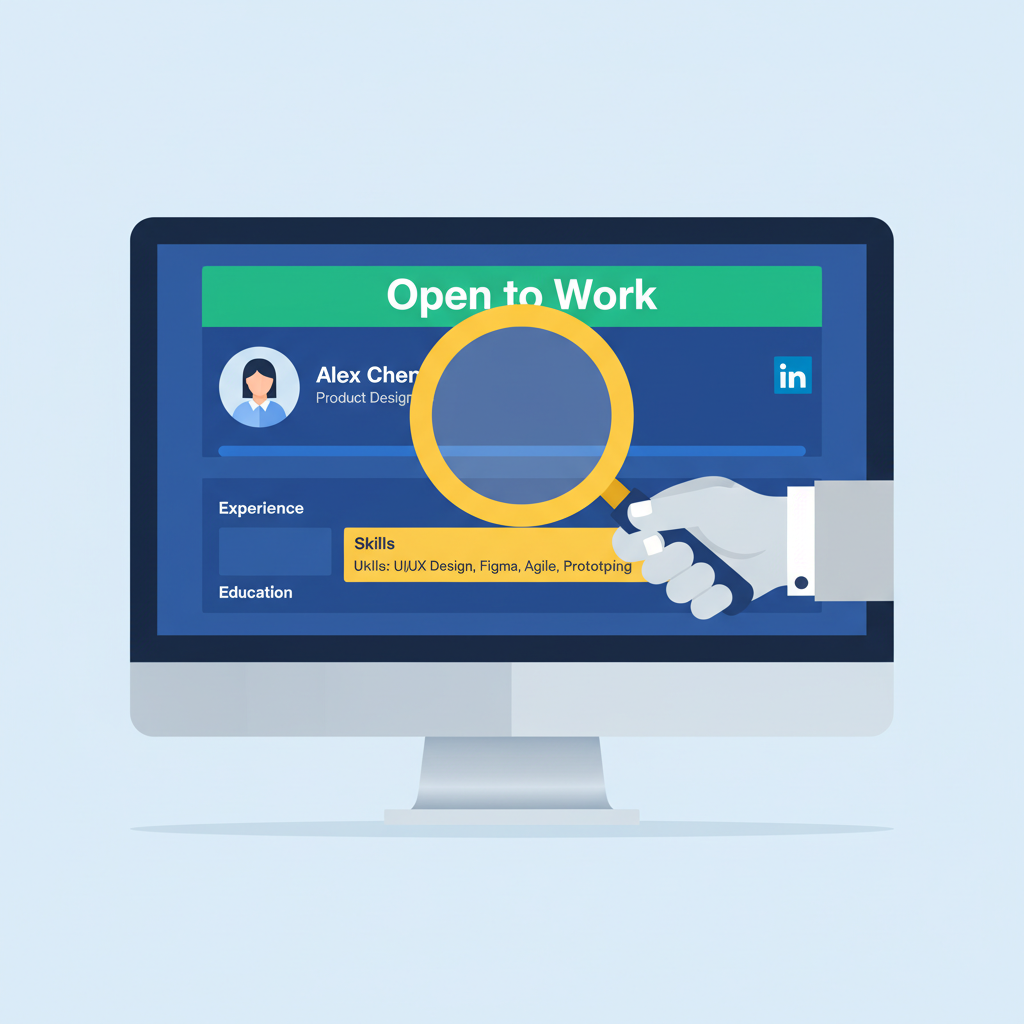
'Open to Work' Feature: A confidential LinkedIn setting that signals your job-seeking status directly to recruiters using LinkedIn Recruiter, increasing your visibility to potential employers without broadcasting your search publicly.
Activate LinkedIn's 'Open to Work' feature to signal your job-seeking status discreetly to recruiters. This is a powerful, free tool that helps talent acquisition teams specifically target available candidates, increasing your chances of being found without publicizing your search.
Your headline and 'About' section are prime real estate. Craft a concise, keyword-rich headline that immediately communicates your value. Instead of "Seeking New Opportunities," try "Senior Marketing Manager | SaaS Growth Expert | Driving 25% ARR Growth."
LinkedIn's algorithms increasingly use AI to match candidates to roles, going beyond basic keywords. Ensure your skills, experience, and even your activity align with your target roles. These AI recruiting LinkedIn trends 2026 prioritize profiles demonstrating holistic fit, influencing how recruiters use LinkedIn to find ideal candidates.
A complete profile provides more data points for recruiters to filter by, directly impacting how recruiters use LinkedIn to narrow down millions of profiles. Fill out every section – education, volunteer experience, projects, certifications – to maximize your discoverability. Incomplete profiles are often filtered out automatically. Ready to optimize your profile? Get your Free LinkedIn Profile Audit Checklist today and see where you stand!
By implementing these strategies, you're not just creating a profile; you're building a powerful magnet for the opportunities you desire, directly addressing how recruiters use LinkedIn for their sourcing needs.
Step 1: Identify Your Target Keywords: Research job descriptions for your desired roles. Note the specific skills, technologies, and responsibilities repeatedly mentioned. Review competitor profiles within those roles for additional terms. This informs your LinkedIn keyword strategy for job search.
Step 2: Integrate Keywords Naturally: Weave these identified keywords into your headline, summary, experience descriptions, and skills sections. Avoid "keyword stuffing," which can appear spammy. The goal is a natural, conversational flow that still hits all the relevant terms.
Step 3: Optimize for Recruiter Filters: Fill out every section thoroughly (education, volunteering, projects, licenses, certifications). These sections provide more filters for recruiters using LinkedIn Talent Solutions, significantly broadening your discoverability.
Step 4: Test Your Discoverability: Use LinkedIn's 'search for people' feature. Input your target keywords and filters a recruiter might use. See if your profile appears in the results and where it ranks. This provides insights into your actual LinkedIn recruiter search best practices effectiveness.
Mastering these steps helps you anticipate recruiter actions, turning your profile into a precisely targeted asset that aligns with their specific search criteria.
This often indicates recruiter interest, even if they don't connect immediately. Tailor your profile to repeat viewers or industry trends you notice in these views. This is crucial for personal branding strategies on LinkedIn.
Liking, commenting, and sharing industry-relevant posts increases your visibility within recruiter networks. Active engagement keeps your profile top-of-mind and signals current industry knowledge. Dublin, Ireland, for instance, sees significant EMEA talent acquisition via LinkedIn, often influenced by visible engagement.
Q: What specifically do recruiters look for on a LinkedIn profile in 2026?
A: Recruiters in 2026 prioritize specific keywords in headlines and experience, validated skills (especially via LinkedIn Skills Assessments), a complete profile, and recent activity. Understanding how recruiters use LinkedIn for these criteria is key. They also look for specific locations like Austin, TX, where LinkedIn data shows a 20% year-over-year increase in job postings.
Q: How can I make my LinkedIn profile stand out if I don't have extensive experience?
A: Focus on transferable skills, project work (even academic or volunteer), and a strong 'About' section explaining your aspirations. Utilize the 'Open to Work' feature and seek skills endorsements. Consider relevant certifications and courses, as per data from the Bureau of Labor Statistics (BLS) on emerging job market skills in 2026.
Q: Can optimizing my LinkedIn profile really lead to more job offers?
A: Yes, definitely. Optimized profiles lead to a 3X increase in recruiter messages within 60 days, ensuring discoverability by the right recruiters. This brings more relevant opportunities and job offers. For instance, New York City's finance sector saw a 30% rise in LinkedIn recruiter activity since 2023, targeting optimized profiles. You can learn more with LinkedIn profile examples for 2026.
Mastering how recruiters use LinkedIn in 2026 means understanding their tools, speaking their language (keywords), and strategically optimizing your profile. We've covered key strategies, step-by-step optimization, and common pitfalls. Ready to transform your LinkedIn profile into a recruiter magnet? Start implementing these strategies today and sign up for our exclusive 'LinkedIn Profile Power-Up' workshop. Imagine recruiters reaching out to you with exciting opportunities, saving you countless hours of job searching – that's the power of a truly optimized LinkedIn presence.