Insides of ATS Resume
Stop ATS rejections! Learn 7 proven ATS resume optimization strategies for 2026. Get hired faster.
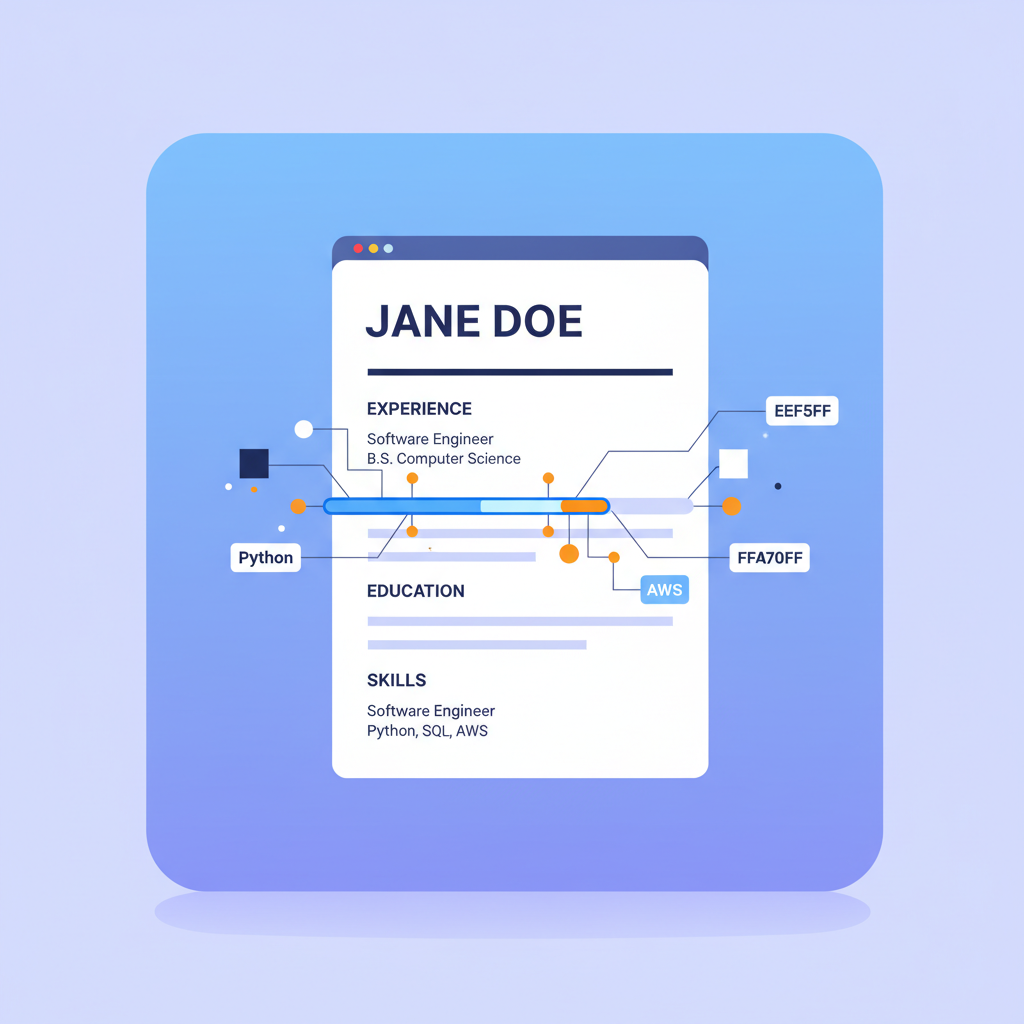
Stop ATS rejections! Learn 7 proven ATS resume optimization strategies for 2026. Get hired faster.
Quick Answer: ATS Resume Optimization tailors your resume's structure and keywords for Applicant Tracking Systems (ATS). This ensures easy parsing and higher relevance scores, boosting your chances of passing automated screenings and securing interviews in 2026.
ATS Resume Optimization is the deliberate process of tailoring a resume's content, formatting, and keywords to align with the algorithms of Applicant Tracking Systems. This ensures successful parsing and higher relevance scores against job descriptions.
Resume Parsing is the automated extraction of data from a resume by ATS software, converting unstructured text into structured, searchable fields. Parsing accuracy is critical for a resume's visibility, especially given the global ATS market was valued at $2.2 billion in 2023, projected to reach $4 billion by 2030 (HR Technology Market Report 2024).
Semantic Keyword Matching is an advanced ATS capability that understands the conceptual meaning and relatedness of terms, beyond exact matches. Optimizing for semantic matching involves using synonyms and related industry terminology effectively. The evolving role of AI/ML in modern ATS platforms means simply stuffing keywords is no longer sufficient for 2026 trends. Research from a 2024 university study on Natural Language Processing (NLP) in recruitment found that NLP models can improve keyword matching accuracy by up to 25% by understanding context.
Many applicants mistakenly believe that keyword stuffing guarantees success. However, modern ATS platforms, particularly those utilizing AI and machine learning in hubs like Silicon Valley, where over 70% of tech companies use advanced systems, prioritize context and semantic understanding over mere keyword counts. Your goal is to integrate keywords naturally and meaningfully into your ATS-friendly resume.
Understanding these core components of an Applicant Tracking System offers a significant edge in your job search.
For Beginners: Semantic Keyword Integration. Move beyond exact matches by understanding the job description's underlying themes. If a role asks for "customer relations," also include "client engagement" or "support services." This broadens your reach without keyword stuffing.
For Professionals: The Power of Standard Formatting. As an intermediate technique, choose clean, standard layouts with clear headings like "Work Experience," "Education," and "Skills." Avoid complex graphics, tables, or non-standard fonts that ATS software might struggle to parse. In New York City's competitive finance and consulting sectors, where ~80% of major firms rely on stringent ATS filters, a simple format ensures readability.
Quick Wins: Contextualizing Experience. Use strong action verbs and quantifiable achievements. Instead of "Managed projects," write "Spearheaded 10+ projects, increasing efficiency by 15%." This data-driven language resonates with both ATS algorithms and human recruiters, especially for roles in rapidly growing tech hubs like Austin, TX, where new ATS technologies are often piloted.
Free Options: Leveraging Free ATS Checkers. Utilize online tools like Jobscan or Resume.io to test your resume's compatibility without cost. These tools highlight missing keywords and formatting issues, providing immediate feedback. They simulate how these systems scan resumes for keywords and can significantly improve your resume format for free.
Quick Wins: Tailoring for Each Role. This is a crucial quick-win tactic for maximum relevance scores. Customize your resume for every application by mirroring keywords and phrases directly from the job description. Even minor adjustments can significantly improve your chances.
For Beginners: Contact Information Clarity. Ensure your name, phone number, email, and LinkedIn URL are clearly visible and easily extractable by resume parsing software. Placing it at the top in a standard font prevents parsing errors.
For Professionals: Section Header Consistency. The unsung hero of successful parsing is consistent, standard section headers. Stick to widely recognized titles such as "Work Experience," "Skills," "Education," and "Summary." Avoid creative but ambiguous headings like "My Journey" or "What I Bring to the Table," which confuse the ATS.
These proven strategies ensure your resume stands out to both automated systems and human recruiters, paving the way for more interviews.
Step 1: Analyze the Job Description (The Keyword Blueprint). Carefully read the job description to identify primary keywords, secondary skills, and required qualifications. Look for repeated terms and responsibilities to understand what the ATS is programmed to find. For example, if "project management software" is mentioned, ensure you include "Asana," "Jira," or "Trello" if you have experience.
Step 2: Choose Your Format Wisely. Opt for a clean, chronological, or hybrid resume format. Avoid intricate designs with multiple columns, text boxes, or excessive graphics. These elements often confuse resume parsing software, leading to incomplete data extraction. A simple structure helps how these systems scan resumes effectively.
Step 3: Integrate Keywords Naturally. Weave the identified keywords into your experience, skills, and summary sections. Do not simply list them; incorporate them into descriptive sentences that highlight your capabilities. For further guidance, consider learning how to write a powerful resume summary that naturally includes keywords.
Step 4: Quantify Achievements with Metrics. Provide concrete, measurable examples of your accomplishments. Numbers, percentages, and dollar figures stand out to both ATS and human recruiters. This helps demonstrate impact and validates your skills. For instance, instead of "Improved customer satisfaction," write "Increased customer satisfaction scores by 20% over six months."
By following these steps, you systematically build an ATS-optimized resume designed for success.
Sidestepping these common errors significantly improves your resume's chances of passing initial automated screenings.
Pro Tip 1: The 'Hidden Keywords' Strategy. This insider knowledge involves incorporating essential but less obvious terms. Some companies use internal terminology or acronyms for certain skills or tools. Research the company's website, LinkedIn profiles of employees, and past job descriptions to uncover these 'hidden' keywords. For roles in the Remote Work Market, which accounted for over 30% of new job postings in 2025, understanding specific remote collaboration tools and methodologies as keywords is crucial. The U.S. Bureau of Labor Statistics (BLS) projects strong growth in tech roles by 15% by 2030, making industry-specific hidden keywords vital.
Pro Tip 2: AI-Driven ATS Feedback Loops. Optimize your resume using tools that simulate ATS parsing for real-time improvements. Platforms offering 'AI-powered resume analysis' provide detailed feedback on keyword relevance, readability, and formatting. This allows for iterative refinement, ensuring your resume is primed for the most sophisticated systems. Consider exploring the best ATS resume builders 2026 to leverage these tools.
Implementing these advanced strategies gives you a distinct advantage in highly competitive job markets.
Q: What is an ATS resume and why does it matter for my job application?
A: An ATS resume is optimized for Applicant Tracking Systems, software that screens job applications. It matters because over 75% of large companies use ATS, and a non-optimized resume is likely to be rejected before a human reviewer sees it, significantly reducing your interview chances in 2026.
Q: How do I check if my resume is ATS friendly for free?
A: You can check your resume's ATS compatibility for free using online tools like Jobscan or Resume.io. Simply upload your resume and the job description, and the tool will provide a match score and highlight areas for improvement, such as missing keywords or formatting issues.
Q: Can using an ATS resume template guarantee me an interview in 2026?
A: While an ATS resume template simplifies formatting and can increase parsing accuracy, it doesn't guarantee an interview. True success comes from tailoring the content, integrating semantic keywords, and quantifying achievements for each specific role, which our guide helps you master for significantly higher interview rates.