By 2025, 85 million jobs may be displaced by AI, but 97 million new ones could emerge, according to the
World Economic Forum's 2023 report. Are you worried about AI taking your job, or eager to harness its power for career growth? Many professionals feel a blend of anxiety and excitement, unsure how to navigate the rapidly evolving AI-driven workplace. This guide will provide you with a definitive, actionable blueprint for adapting to AI in the workplace for 2026 and beyond, transforming uncertainty into a strategic advantage and securing your professional future. Adapting to AI in the workplace is no longer optional; it's essential for career resilience.
Quick Answer: Adapting to AI in the workplace means acquiring new skills, embracing AI tools, and developing human capabilities. Focus on prompt engineering, critical thinking, emotional intelligence, and data literacy to thrive by 2026.
Understanding Adapting to AI in the Workplace
AI Workplace Adaptation: The proactive process of individuals and organizations evolving their skills, processes, and culture to leverage artificial intelligence technologies effectively, mitigating job displacement risks and enhancing productivity and innovation.
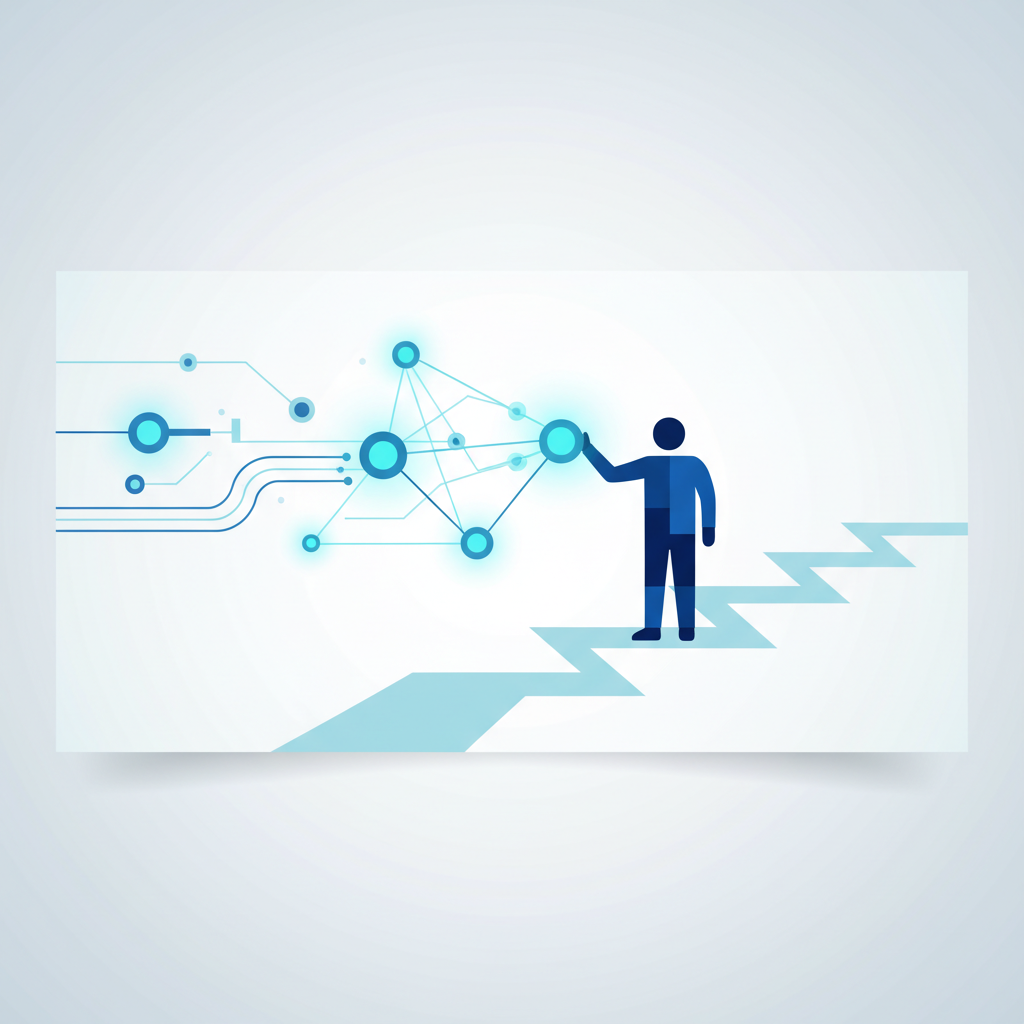
The accelerating pace of AI adoption, particularly with Generative AI, makes understanding its impact critical. AI is rapidly shifting from mere automation to powerful augmentation. This means AI tools enhance human capabilities, rather than simply replacing tasks. This shift creates an urgent need for individuals to proactively engage in AI Upskilling 2026 rather than react defensively. Proactive adaptation is key to maintaining a competitive edge when adapting to AI in the workplace.
A common misconception is that AI will only impact tech jobs. In reality, AI's pervasive influence spans all sectors and roles, from marketing to healthcare to finance. The focus for professionals should be on skill evolution, not job elimination. McKinsey & Company's 2024 analysis highlights how almost every job role will see some level of AI integration, emphasizing augmentation over wholesale replacement.
7 Essential AI Workplace Adaptation Strategies for 2026 and Beyond
Here are crucial strategies to future-proof your career as AI reshapes the work landscape.
- Embrace Prompt Engineering & AI Tool Fluency: Learning to interact effectively with large language models (LLMs) like ChatGPT or Google Bard is a beginner-friendly approach. For entry-level professionals, mastering prompt engineering means crafting precise queries to generate desired outputs for daily tasks, enhancing efficiency. Many free AI skills resources, such as introductory courses on Coursera or LinkedIn Learning, offer practical steps.
- Cultivate Data Literacy & Analytical Thinking: This is an intermediate technique for professionals aiming for mid-career AI adaptation. It involves interpreting AI-generated insights, understanding potential data biases, and using data to inform strategic decisions. Reskilling for the AI economy requires recognizing patterns and drawing meaningful conclusions from AI-processed information.
- Master Augmented Collaboration: This advanced method focuses on working seamlessly with AI co-pilots and intelligent assistants to boost productivity and creativity. For leaders, developing leadership in AI-driven teams means fostering environments where humans and AI collaborate, rather than competing. This synergy enhances human output without replacing it.
- Prioritize Uniquely Human Skills: Creativity, Critical Thinking, Emotional Intelligence: These soft skills remain irreplaceable by AI. Developing creativity helps leverage AI for novel idea generation, while critical thinking evaluates AI outputs for accuracy and bias. Emotional intelligence is vital for navigating human-AI interactions and team dynamics. Online AI learning platforms often offer courses that blend technical and human skill development, providing free/accessible options.
- Adopt a Lifelong Learning & Micro-Credentialing Mindset: Continuous learning is a quick-win tactic for staying relevant. As AI technology evolves, short courses, certifications, and AI workplace training courses provide targeted skill upgrades for effectively adapting to AI in the workplace. This approach ensures your knowledge base remains current with emerging AI trends.
- Develop Ethical AI Awareness & Governance Principles: Understanding the societal impact, potential biases, and responsible use of AI is crucial. Professionals must grasp ethical frameworks within organizational guidelines. London's Tech City, UK, a major European tech hub, actively focuses on ethical AI integration in workplaces, setting a global standard.
- Strategic Networking in AI-Driven Industries: Connecting with professionals at the forefront of AI adoption provides invaluable insights and opportunities. Participating in industry forums or online communities can open doors to new collaborations and career pathways. Silicon Valley, USA, remains a global epicenter for AI innovation and networking.
These strategies collectively form a robust defense against job displacement while simultaneously unlocking new avenues for career growth and professional development. They are essential for AI career resilience.
How to Build Your Personal AI Adaptation Blueprint: A Step-by-Step Guide
- Step 1: Assess Your Current Role & AI Exposure: Identify which of your daily tasks are susceptible to AI automation and which can be significantly enhanced by AI tools. Use a simple self-assessment template to categorize your responsibilities.
- Step 2: Identify High-Value AI Skills for Your Niche: Research industry-specific AI tools and analyze job descriptions for "AI skills for future jobs" within your field. Look for skills directly applicable to augmenting your role, not just generic tech skills.
- Step 3: Craft a Skill Development Roadmap (2026 Focus): Outline specific courses, hands-on projects, or mentors to acquire your identified high-value skills within a realistic timeline. Consider certifications as a formal recognition of your progress.
- Step 4: Implement & Iterate: Apply your newly acquired skills to real-world tasks immediately. Track your progress and refine your approach based on the results, continuously adjusting your blueprint as AI technologies evolve.
Common Mistakes to Avoid in Your AI Adaptation Journey
- Ignoring AI's Impact: What not to do is pretend AI isn't happening. This leads to professional obsolescence instead of growth, as industries rapidly integrate AI tools. Ignoring AI means missing opportunities for innovation.
- Over-focusing on Technical AI Skills Only: A common pitfall is neglecting human-centric skills like critical thinking and emotional intelligence. While technical skills are valuable, AI systems still require human oversight and unique soft skills for effective collaboration.
- Waiting for Formal Training: Error in strategy often involves waiting for your employer to provide comprehensive training. Correction: Proactive self-learning through online courses, tutorials, and personal projects is key to staying ahead.
Expert Tips for Achieving AI Career Resilience and Leadership
Building AI career resilience requires forward-thinking and proactive engagement. According to Gartner's 2024 projections, companies adopting AI will see a 30% increase in workforce productivity by 2026, making individual adaptation crucial.
- Pro Tip 1: Become an 'AI Translator': Bridge the gap between technical AI teams and business stakeholders. Insider knowledge on explaining AI capabilities and limitations in business terms can make you indispensable. This role is about fostering understanding and effective implementation.
- Pro Tip 2: Champion AI Ethics and Responsible Use: Build trust and leadership in the AI era by advocating for ethical AI practices. Understanding data privacy, fairness, and transparency demonstrates foresight. Singapore, a leading 'Smart Nation,' actively promotes ethical AI frameworks in its workforce upskilling programs.
Frequently Asked Questions About Adapting to AI in the Workplace
Q: Will AI take my job by 2026?
A: While AI will automate many tasks, it’s more likely to augment jobs than eliminate them entirely. Your role will evolve, requiring new AI skills and a focus on uniquely human capabilities like creativity and critical thinking to remain competitive and adapt your job to AI in 2026.
Q: What if my company isn't investing in AI training?
A: Take initiative for your own AI Upskilling 2026. Many free online AI learning platforms and low-cost courses are available. Focus on practical applications and demonstrate new skills to your employer, potentially inspiring broader organizational change or finding new opportunities.
Q: How can mastering AI adaptation lead to a promotion or new opportunities?
A: Mastering AI adaptation makes you a more efficient, innovative, and valuable employee. By leveraging AI to enhance productivity and problem-solving, you demonstrate leadership and foresight. This can lead to promotions, specialized AI-driven roles, or increased earning potential by becoming an AI-savvy professional.
Conclusion
Adapting to AI in the workplace isn't about fearing change; it's about embracing a strategic future. By focusing on critical human skills, prompt engineering, data literacy, and continuous learning, you can transform AI from a threat into your most powerful career accelerator. Ready to build your personalized AI Adaptation Blueprint for 2026? Explore our recommended AI upskilling courses and resources today to secure your future. The professionals who thrive in 2026 and beyond will be those who proactively adapt, innovate alongside AI, and lead with uniquely human intelligence.